Dive Brief:
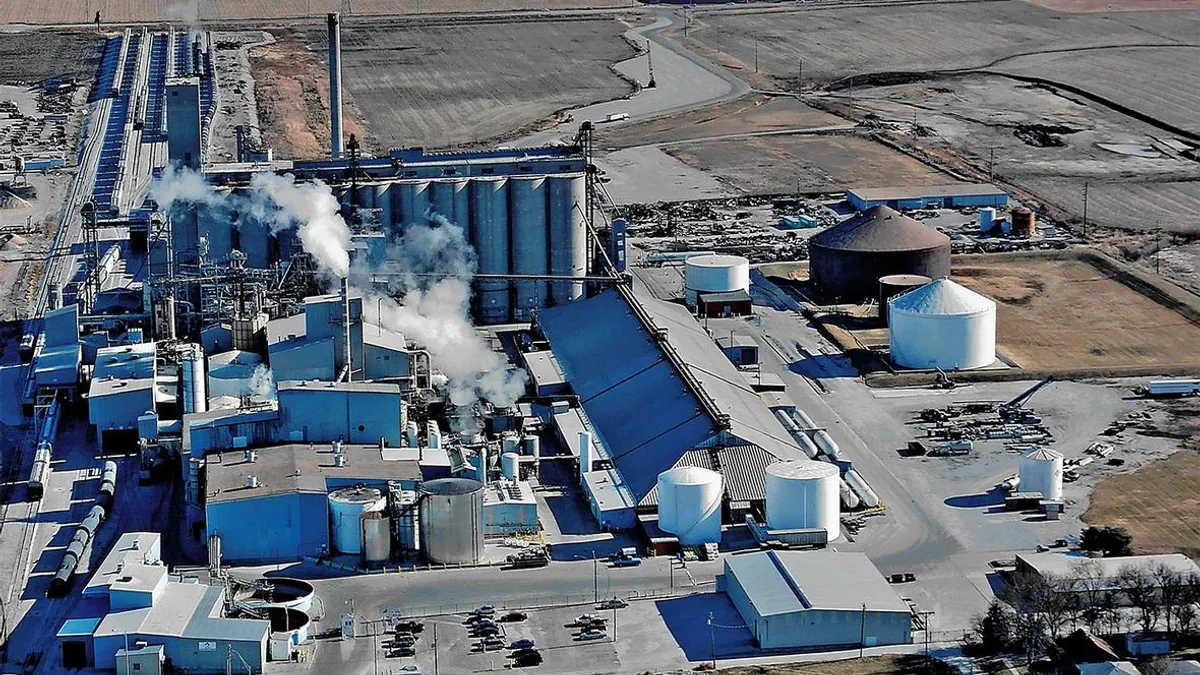
- Archer-Daniels-Midland plans to expand capacity at four U.S. oilseed-crushing plants serving food, animal feed and biofuels markets, with six more sites identified for potential growth, executives said on an Aug. 4 earnings call.
- The projects, estimated at roughly $100 million, are expected to boost output at existing plants for about a quarter of the investment required for a new facility, President and CEO Juan Luciano told investors.
- "We have decided to have a phased approach to allow for offramps or to see how the industry develops over time," Luciano said.
Dive Insight:
The agriculture company’s U.S. capacity projects follow expansions at two Brazil facilities last year and an extension completed this year in Uberlândia, Brazil, Luciano said. Both countries have strong domestic biofuels markets and favorable margins, partly supported by elevated global energy prices.
ADM executives did not identify the plants slated for expansion, but a company spokesperson confirmed they are four U.S. projects previously unveiled in July. The projects would increase oilseed crush capacity by about 700,000 metric tons, according to a press release.
The work includes storage and equipment upgrades in Frankfort, Indiana; increased extraction-system capacity and other upgrades in Deerfield, Missouri; debottlenecking at ADM’s Lincoln, Nebraska, crush plant; and select equipment improvements at its Spiritwood, North Dakota, joint venture with Marathon Petroleum, the release says.
The expansions, expected to be completed in 2028 or 2029, are driven by growing demand for renewable fuels and vegetable oil, per the release.
The plants are part of a first expansion phase, Luciano told investors, and were chosen for their attractive returns. The projects are expected to stay within ADM’s stated 2026 capital-expenditure range of $1.3 billion to $1.5 billion.
Separately, ADM reported a multimillion-dollar investment in May to expand corn receiving capacity at its Clinton, Iowa, processing facility.
The project will add two high-speed receiving pits, each capable of handling up to 25,000 bushels per hour, according to a press release. The upgrades, scheduled for completion this year, are expected to move corn more efficiently through the facility.