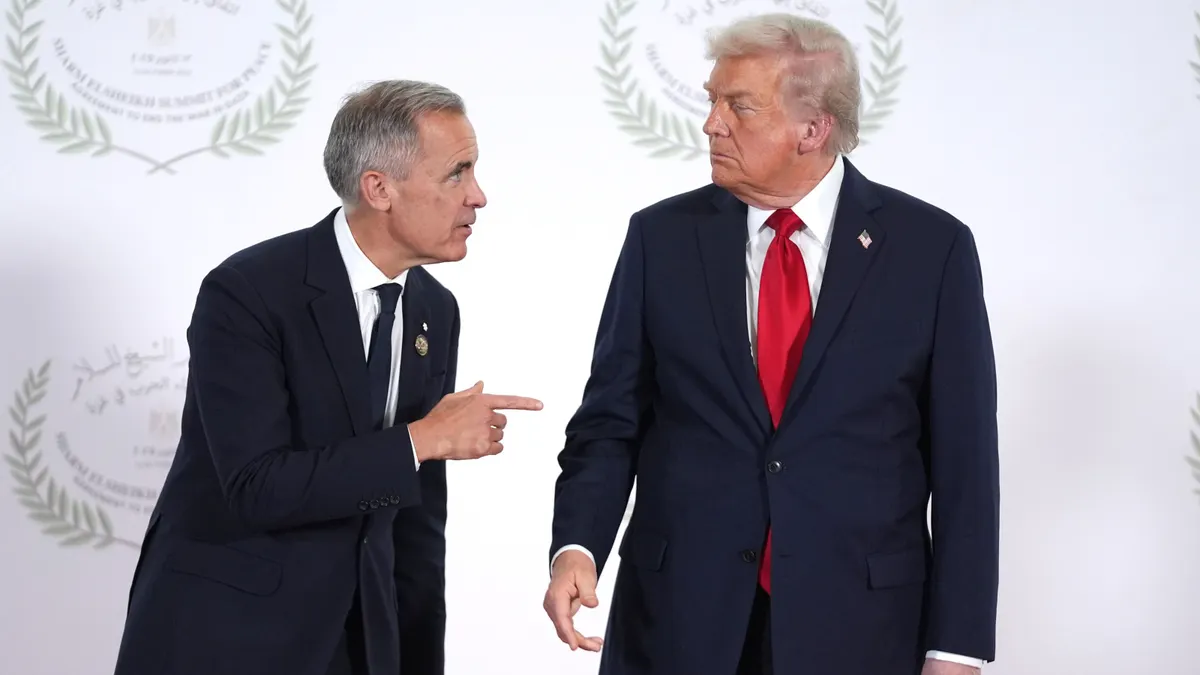
Canada has made good on its promise to enact retaliatory tariffs to match levies the U.S. imposed on imports from the country over the weekend, raising the temperature on the fraught trade relationship.
Starting Sept. 8, Canada will begin charging various tariffs of either 15%, 25% or 50% on a range of U.S. goods that match the rates faced by products currently targeted by Section 338 and Section 232 tariffs from the Trump administration, per a Tuesday news release. The release said the levies will specifically focus on steel, dairy products, appliances, agricultural equipment, electronics, seafood, and pulp and paper. Canada also said it would introduce a $7.5 billion support package to help businesses impacted by U.S. tariffs.
However, the country’s Department of Finance on Wednesday said it would remove seafood and fish products from the list of affected products.
“We are continually working with Canadian industries to assess the effectiveness of these measures, with a primary focus on industries that have been targeted by U.S. tariffs,” the department said in a statement on X, noting that it had made select adjustments to remove seafood and fish products “based on feedback.”
Steel and aluminum imports will be among those to face a 50% tariff, mirroring similar sectoral U.S. tariffs and hiking the previous Canada levy from 25%. Appliances, dairy products, fish and seafood, and certain steel and aluminum derivatives will incur a 25% tariff. Canada will also maintain its existing counter-tariffs, including those on U.S. automobiles.
“This focused response will protect Canadian workers, farmers, fishers, families, and businesses, defend industries harmed by unjustified U.S. tariffs, and help Canadian producers compete with U.S. products in the Canadian market,” the news release says.
Canada is instituting these new tariffs in direct response to similar levies the U.S. imposed over the weekend. While the two North American trading partners conducted negotiations ahead of the duties, the talks fell apart late last week even after U.S. President Donald Trump delayed the tariffs for additional discussions.
Canada Prime Minister Mark Carney said his decision to call back negotiators Friday, hours before the U.S. tariffs took effect, was due to new terms proposed by the Trump administration that “were uneconomic, unfair, and undermined the net benefits to Canada.” Carney then vowed to match the new tariffs “dollar for dollar.”
“When the United States asked too much and offered too little, we chose to stand up for Canadians,” François-Philippe Champagne, Canada’s minister of finance and national revenue, said in Tuesday’s release. “Our dollar-for-dollar, rate for rate counter-tariffs as well as a multi-billion dollar support package will protect workers, farmers, families, and businesses as we build a stronger, more resilient, and more diversified Canadian economy.”
The U.S. blamed Canada for the breakdown in trade talks last week, and Trump on Monday announced additional 50% tariffs on cars, trucks, auto parts and steel from the country. However, the tariff threat has not been officially documented, and it remains unclear how the potential levies would interact with existing sectoral duties already in place for such goods.
Editor’s note: This story has been updated with details from Canada’s Department of Finance about the removal of seafood and fish products from the country’s planned counter tariffs.