Dive Brief:
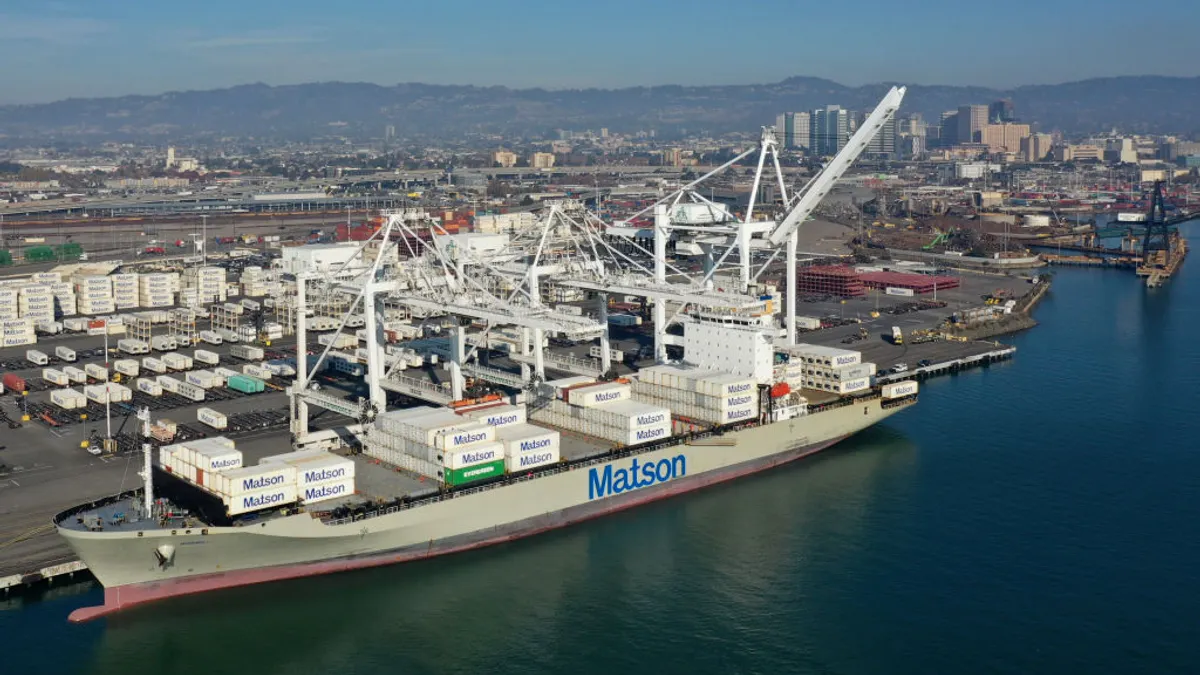
- Shippers replenished inventory and pulled forward seasonal goods during Q2, driving demand for exports from China and Southeast Asia, CEO Matthew Cox said during Matson’s earnings call.
- Through July, freight demand for Matson’s China-U.S. expedited shipping services CLX and MAX were in excess of capacity. Looking ahead, the ocean carrier expects its China services to be at or near capacity through the peak season, Cox told analysts.
- “Looking ahead, we are optimistic about the second half of the year, supported by continued demand in our China service, resilient consumer spending, and a stable Transpacific trading environment,” Cox said.
Dive Insight:
High freight demand is being seen for e-commerce shipments despite tighter supply conditions in the Transpacific lane, Cox said.
In turn, container volumes increased 15.2% year over year, whereas Q2 2025 saw a market decline from tariffs, Cox said.
While the carrier expects a strong third and fourth quarter, it also expects demand in the fourth quarter to reflect a more traditional seasonality pattern, Cox said. This is compared to the elevated freight period that took place last year during the same time.
Cox said during Q2 some customers aimed to get ahead of the general rate increases and higher fuel surcharges, while also working to shield against tariff discussions and uncertainty linked to the Iran war.
This shipper sentiment has been displayed across both West Coast and East Coast ports.
Shippers don’t want to be caught “flat-footed” so they are advancing their shipments in order to have their goods in the U.S. market before any potential disruption, CEO Noel Hacegaba at the Port of Long Beach, said during a July press briefing.
Both the Port of Long Beach and Port of Los Angeles reported strong June cargo volumes as geopolitical uncertainty led some shippers to frontload cargo. Volumes at the Port of Long Beach port were up 10.6% YoY in June, while the Los Angeles port's cargo volumes were up 12% YoY.
“This is part of the reason why you saw the retail community advance shipments and inventories because they just don’t know what’s going to happen with any level of specificity after these Section 122s expire,” Executive Director at the Port of Los Angeles Gene Seroka said during a July press briefing, referencing a temporary 10% global tariff that expired July 24.
Volumes at the Port of New York and New Jersey have also shown “indications of an earlier front-loaded peak shipping season driven by changing federal trade policy,” according to a press release. In June, port volumes were up 12% YoY.