Dive Brief:
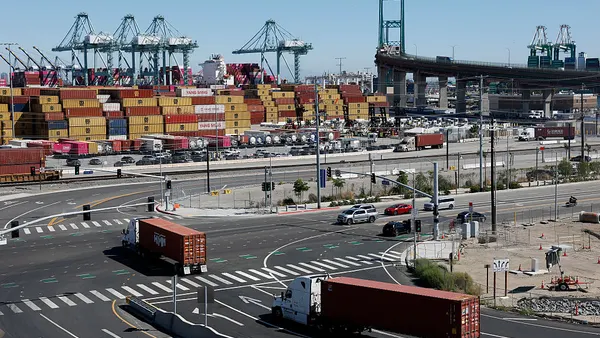
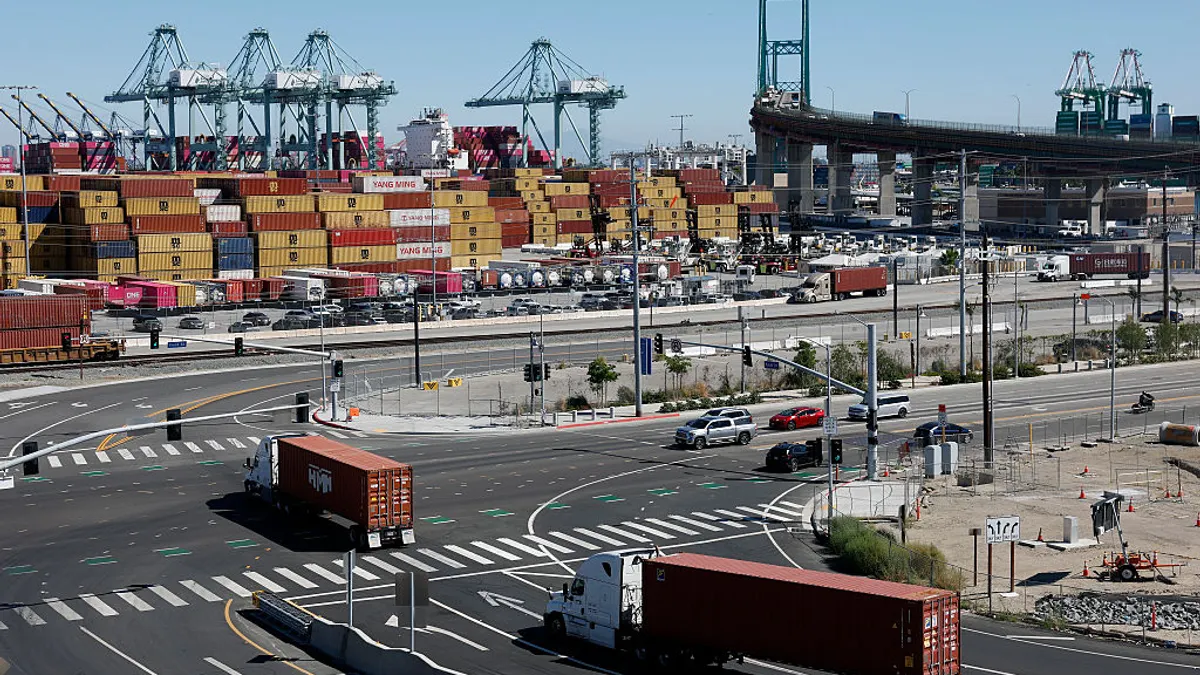
- Container dwell times remained elevated at the Port of Los Angeles and Port of Long Beach in September due to a continued glut of peak season cargo, according to the Pacific Merchant Shipping Association.
- Local truck dwell times were 3.18 days in September, up from 2.95 days in August, per an Oct. 15 press release. Rail dwell times were at 7.19 days last month, up from 6.75 days the month prior.
- “September was a record-setting month for the Ports of Los Angeles and Long Beach, and the higher dwell times reflect the sheer volume of cargo moving through the complex, with rail dwell continuing to be the area of greatest pressure,” PMSA Senior Manager of Public Affairs Natasha Villa said in the release.
Dwell times rise at San Pedro ports
Dive Insight:
The ocean shipping peak season continues to defy forecasts of an earlier end, combining with Panama Canal access restrictions, higher diesel costs and the looming expiration of a U.S. and China trade war truce to drive record-high volumes at the San Pedro Bay ports.
“So, this confluence of events means that volume will probably stay a little bit more elevated than normal, and a couple of deadlines that may come to pass are in the minds of supply chain experts around the world,” Port of Los Angeles Executive Director Gene Seroka said during a media briefing on Oct. 9.
The Port of Los Angeles handled 1.04 million TEUs in September, the busiest month in its 118-year history, according to Seroka. Similarly, the Port of Long Beach processed 997,177 TEUs last month, the port’s busiest month in its 115-year history, per a press release.
The enduring peak season may finally be ending though, according to the Global Port Tracker from the National Retail Federation and Hackett Associates.
Most holiday merchandise has arrived and the remainder of cargo moved by shippers this year will be for last-minute replenishment and preparation for early 2027, NRF VP of Supply Chain and Customs Policy Jonathan Gold said in a press release.
“Even with any fluctuations in final data, we’re likely past the busiest part of the year,” Gold said.
Editor's note: This story was first published in our Logistics Weekly newsletter. Sign up here.