Dive Brief:
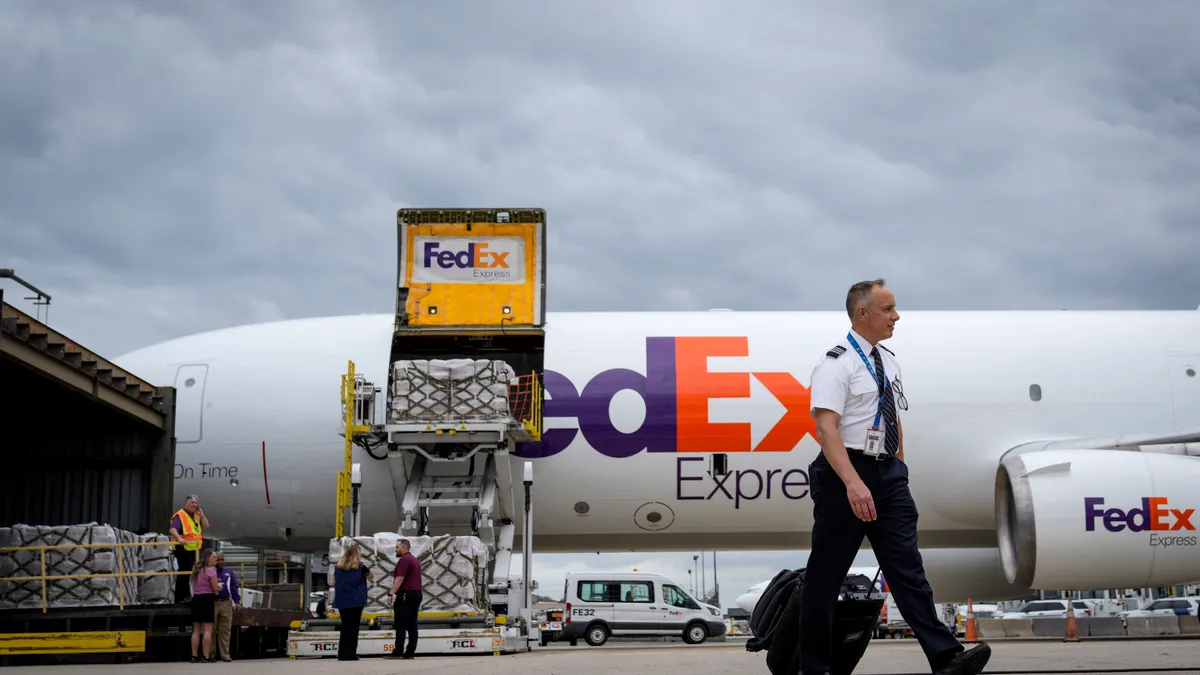
- FedEx's first holiday shipping season "with meaningful volume" handled in Network 2.0 facilities was also the most profitable peak in company history, President and CEO Raj Subramaniam said on a Q3 earnings call Thursday.
- FedEx was "more disciplined and data-driven" in terms of its peak season forecasting, which benefited profitability, according to Subramaniam. Close customer collaboration helped the company deploy resources in a more effective manner, he added.
- Additionally, FedEx's commercial team helped drive "revenue quality" during the peak season, according to Subramaniam. The company posted a 5% YoY bump in revenue per package in the U.S. for the quarter which ended Feb. 28 — a period that featured various temporary holiday surcharges.
Dive Insight:
Network 2.0 is FedEx's yearslong undertaking to integrate its historically separate Ground and Express networks, with the company eyeing cost reductions and operational improvements in the process. As the carrier continues to advance the plan, its peak season service levels have improved. According to ShipMatrix data, FedEx posted a 95.3% on-time delivery rate in December 2025, up from 91.8% in December 2024.
ShipMatrix noted that excess capacity in the market benefited carrier performance. Still, FedEx was able to achieve higher marks even with average daily U.S. package volume increasing 5% year-over-year in Q3.
"On a year-over-year basis, we increased volume and improved service during the quarter, all while delivering faster to more locations than the competition," EVP and Chief Customer Officer Brie Carere said during the call.
FedEx doesn't see the peak season improvements it touted as temporary, with Subramaniam describing them instead as permanent changes to how the company operates as the Network 2.0 overhaul advances.
About 35% of the carrier's eligible volume will run through nearly 400 facilities "optimized" for Network 2.0 by March's end, Subramaniam said, up from the 25% FedEx reported last month. That percentage will increase to roughly 65% by the next peak season, he added.
New technologies are benefiting the company during its transition to Network 2.0, such as an "unload trailer prioritization tool," according to Subramaniam. The capability uses real-time data to help FedEx sequence its yard operations based on trailer content, helping more urgent packages move through the network quicker.
"As Network 2.0 facilities scale, this capability becomes increasingly important, enabling us to better understand a trailer service mix, especially during morning sorts," Subramaniam said. "This tool supports strong service levels by helping prioritize our most time-critical packages even more efficiently."
FedEx is forecasting more than $1 billion in permanent cost reductions in fiscal year 2026, which ends May 31, aided by the advancement of Network 2.0, according to an earnings release. EVP and CFO John Dietrich said FedEx will continue to find more savings opportunities and efficiencies as the initiative progresses.
"So we're excited about the future and where it's going to take us, and we're going to be relentless in going after our costs," Dietrich said.