Dive Brief:
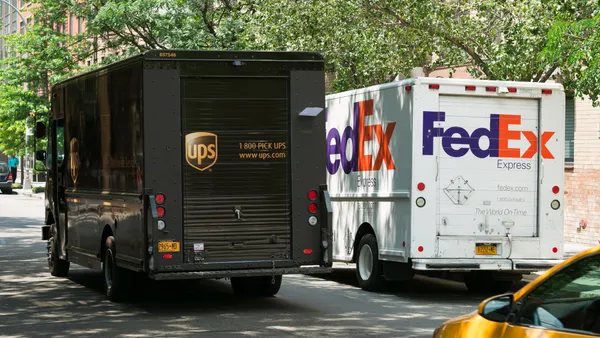
- Lower fuel surcharges and increased delivery discounts helped ease package shipping costs for FedEx and UPS customers in Q3, aligning with seasonal trends, according to the TD Cowen/AFS Freight Index released Wednesday.
- The ground parcel rate per package in Q3 was 38.8% above its January 2018 baseline, marking a 2% quarter-over-quarter drop. The average effective fuel surcharge paid by shippers fell 4.7% quarter over quarter as diesel prices — which the surcharges are based on — moderated in the quarter's first two months, per a presentation accompanying the index.
- However, rates were still up year over year, and pricing relief isn't expected to last. The rate per package is projected to jump to an all-time high of 43.3% in Q4, versus in Q4 2025, as heftier holiday surcharges, elevated fuel surcharges and capacity constraints pressure prices.
Record-high ground shipping costs expected for holidays
Dive Insight:
Escalating fuel surcharges have been on parcel shippers' minds throughout 2026 as the Iran war and Strait of Hormuz disruptions sparked higher prices. Although diesel costs have eased in recent weeks, tweaks to FedEx and UPS' fuel surcharge calculations mean elevated fees can persist even as prices drop.
Between Q1 of 2021 and September 2026, 72% of the ground fuel surcharge increase came from carrier adjustments, with the remainder tied to the climbing price of diesel, according to the presentation. That means even if diesel prices returned to 2021 levels, shippers would still pay roughly triple what they paid in Q1 of 2021.
"I think one thing we all know for sure is even when we see relief on diesel fuel price, we are not going to see material relief on fuel surcharge," Mingshu Bates, AFS Logistics chief analytics officer and president of parcel, said in an interview with Supply Chain Dive.
In a more positive sign for shippers, ground parcel discounting activity from FedEx and UPS rebounded to Q1 levels following a slight decline in Q2. Both carriers tended to favor targeting their discounts toward large shippers over small- and medium-sized businesses, per the presentation.
Bates said large customers typically have enough volume and operational capability to use alternative carriers than smaller shippers, driving FedEx and UPS to offer discounts to ensure those enterprise customers don't divert packages to a competitor. While both carriers have been targeting small business customers in recent years, high-volume clients are vital to keep a steady daily baseline of packages flowing through their facilities.
"If those large carriers lose them, it could potentially have [an] impact on their network," Bates added.
For express parcel shipments, the cost per package jumped to 17.1% in Q3 — up from 15.8% in Q2 — pressured by higher billed weight and more premium services used. Industries like healthcare, a priority customer segment for FedEx and UPS, often need faster and pricier shipping services to meet their business needs. For example, a lab may need samples delivered when it opens at 8 a.m., rather than waiting for a later delivery at a lower price point.
The express cost per package is expected to climb to 20.3% in Q4, an all-time high. At the same time, FedEx and UPS rolled out more aggressive shipping discounts for express shipments in Q3.
"The combination of deeper base discounts and higher surcharges continues to widen the gap between headline rates and what shippers pay," according to the presentation.