Several major big box retailers are recouping substantial returns for defunct tariffs they paid last year, but how they are utilizing the refunds varies.
Rivals Walmart and Target have reported some of the largest windfalls among the many companies that have received money back for President Donald Trump’s International Emergency Economic Powers Act tariffs that the Supreme Court invalidated earlier this year. Meanwhile, home improvement retail giants The Home Depot and Lowe’s have both clawed back funds but on different ends of the spectrum, with Home Depot landing $730 million so far, while Lowe’s reporting $80 million.
Customs and Border Protection launched its dedicated system for returning IEEPA levies in April. Known as Consolidated Administration and Processing of Entries, or CAPE, the system has paid out $106.6 billion in IEEPA tariff refunds, as of Aug. 21. Companies across numerous sectors, such as Amazon, Nintendo, Caterpillar and Kimberly-Clark, have all received some level of refund for the invalidated levies.
With Walmart, Target, Home Depot and Lowe’s all joining the fray, here’s a look at what these retail giants received and how they are incorporating the returned funds into their plans.
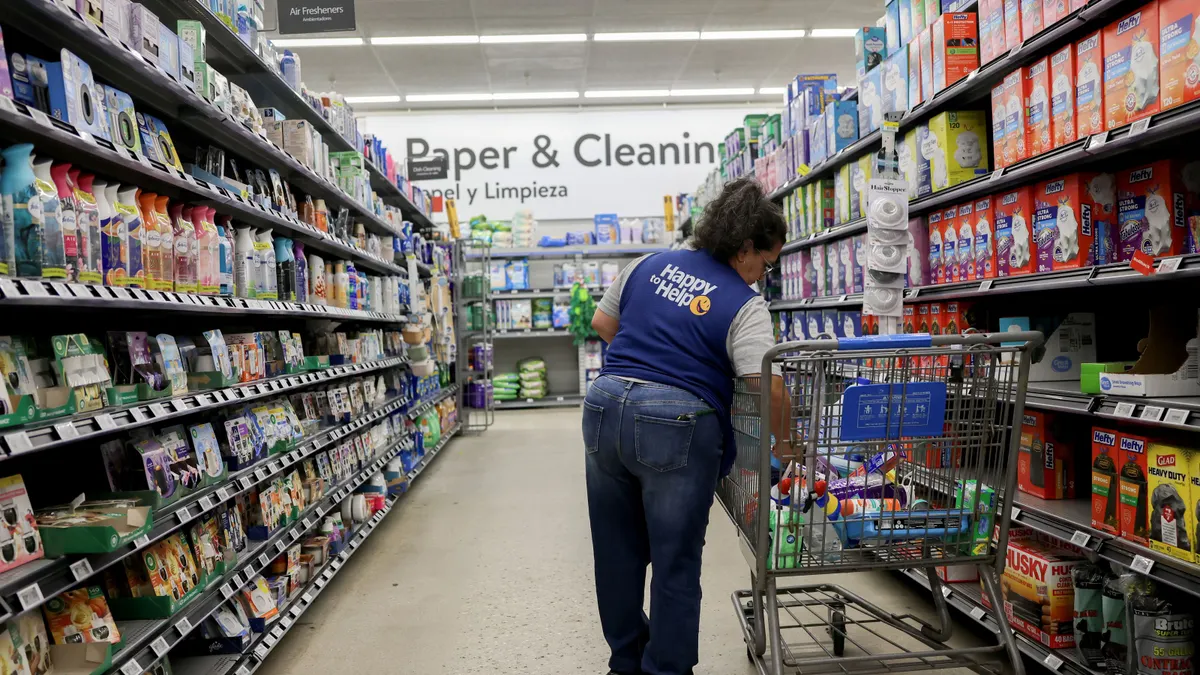
Walmart lowers prices with massive return
Before it ever received tariff refunds, Walmart said it planned to use any reimbursements to lower prices, joining other retailers such as BJ’s Wholesale Club and E.l.f. Beauty.
Thus far, the company has received “substantially all” of the $2.9 billion in IEEPA tariff refunds, EVP and CFO John Rainey said on the company’s Q2 earnings call last week. With the funds in hand, Walmart has begun investing the capital into “customer experience and price leadership,” Rainey said, noting that it has prioritized investments in grocery and general merchandise.
“Looking forward, our Q3 guidance reflects the continued impact of pricing actions taken in Q2 alongside continued prioritization of tariff refunds and the price investment,” Rainey said.
Target expects additional refunds
Target has also secured the “significant majority” of IEEPA tariff refunds it has applied for, accounting for just under $1 billion, EVP and CFO Jim Lee said on the retailer’s Q2 earnings call last week. The company recorded the $994 million as a reduction in cost of sales.
While Target did not share specific plans for the returned funds beyond that, Lee said the company was expecting more refunds in the future. In the meantime, the company is focusing on its financial performance outside any tariff refunds, whether realized or potential.
“The way I would look at the underlying performance is we are trying to focus on adjusted EPS, excluding the tariff refunds,” Lee said. “We think that's a better measurement, just especially given the timing of how the refunds are coming through our P&L.”
Home Depot lines up refunds to fight rising costs
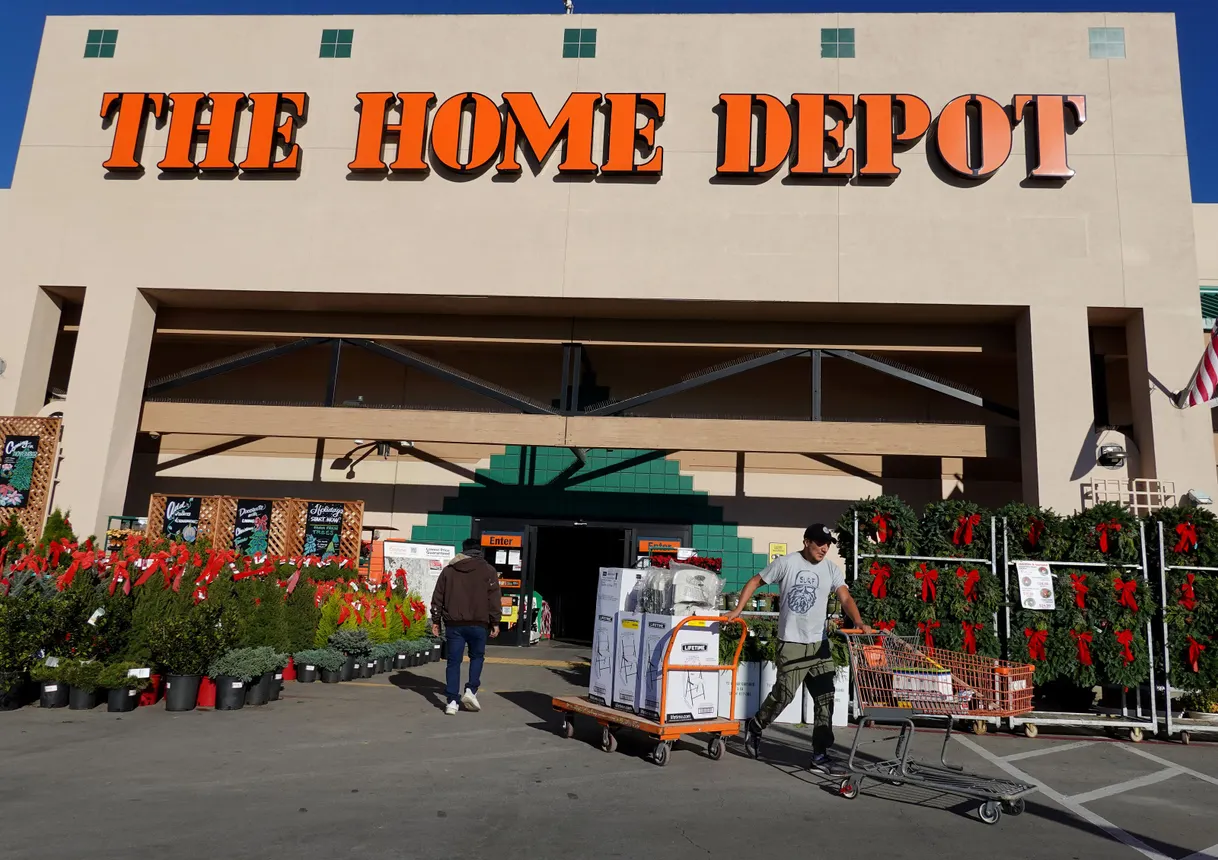
Home Depot has also reported the majority of the $730 million in tariff refunds it has received as a reduction in cost of goods sold, EVP and CFO Richard McPhail said on a Q2 earnings call last week. The remaining funds of $45 million “will hit the P&L” as the home improvement turns inventory over the rest of the year, McPhail added.
The $730 million return landed near the end of June, according to McPhail, who noted that any additional refunds would be “immaterial.”
All told, Home Depot is using the reimbursements to fully offset unplanned cost pressure on fuel, energy and product inputs the rest of the year.
“If you think about it, tariff refunds are a market-borne benefit, they're not unique to The Home Depot,” McPhail said. “And so you would expect when you see market-borne benefits or market-borne pressures, we are using those benefits to offset costs and the market is seeing that in the form of values that have been maintained through the quarter in the face of a pressured cost environment.”
Lowe’s offsets cost hikes while planning for more refunds
Lowe’s has received $80 million in IEEPA tariff refunds, far below the amount recouped by rival Home Depot. However, the company is filing for additional refunds, according to EVP and CFO Brandon Sink, who noted that the current total represents “a smaller portion” of IEEPA tariffs it paid.
“So we're pursuing all of that, all that we're eligible to collect, and anticipate any further benefits are going to be reinvested in customer-facing actions that are going to continue to reinforce our value prop[osition],” Sink said on a Q2 earnings call last week.
In the more immediate term, Lowe’s has utilized the funds it has secured to offset fuel and transportation cost pressure, opting not to immediately follow competitors who lowered prices to drive units or clear seasonal inventory.
“We did not choose then to match some of those promotions because they were not in our financial plan nor did we think it was financially prudent to match them,” President and CEO Marvin Ellison said on the call.