Dive Brief:
- Kroger is leveraging radio-frequency identification and digital shelf labels alongside robotics and artificial intelligence to improve inventory flow, freshness and availability, according to an Oct. 20 analyst and investor day conference.
- The grocery chain is specifically sharing computer vision data with its supplier partners to improve on-shelf availability and boost sales while piloting radio-frequency identification, or RFID, in its bakery division across roughly 1,500 stores, EVP and Chief Store Operations Officer Mark Ibbotson told analysts.
- “Every single one of these actions has the same goal: take cost and complexity out, put the savings back into customer value and execution, and expand margins over time,” CEO Gregory Foran said.
Dive Insight:
Kroger’s supply chain investments enable high-return productivity to put capacity in place to support new stores and e-commerce demand, EVP and CFO David Kennerley said.
For instance, by sharing computer vision data with suppliers, Kroger is getting “better signals” to make faster decisions and take clearer actions, according to Ibbotson.
Elsewhere, the RFID pilot has produced a 98% read performance, which refers to the number of items the technology can successfully read and recognize, while recording nearly 70% faster inventory counts and a 50% reduction in waste. Kroger plans to roll out the technology across more than 2,300 stores by 2029.
“That is a better store routine, less counting, better information, lower waste, higher availability and of course, more sales,” Ibbotson said. “The next job is to use trusted item level data to improve replenishment, production markdowns and fresh decisions across more of our fresh [category].”
RFID gives Kroger a better item signal, Ibbotson said, while AI combines with sales, inventory and sell-through data to help Kroger identify and combat risks earlier. Currently, the grocer’s AI tool connects with 20 data pipelines and provides visibility down to the store-item level.
“And each event should make the next decision better,” Ibbotson said. “Post-event analysis improves the next buy, the next allocation and the next execution decision. Better signals lead to better actions. And those actions improve the data we use the next time.”
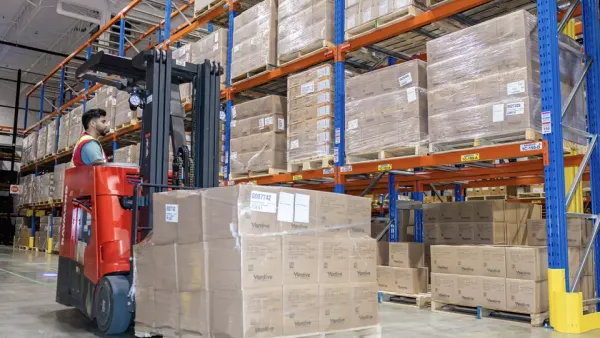
Kroger is also making supply chain facility investments, including building an automated site in Franklin, Kentucky, to support its Nashville, Tennessee, and Louisville, Kentucky, divisions, Kennerley said. The site is expected to be completed in 2028.
Not all of Kroger’s previous technology and automation efforts have panned out, though. The grocer scaled back on its fulfillment center partnership with retail technology developer Ocado after assessing whether the robotic-equipped sites met performance benchmarks.
More recently, Kroger also canceled plans last year to open an automated e-commerce fulfillment center in North Carolina developed alongside Ocado. A facility in Tennessee was also set to close earlier this year.
Editor’s note: This story was first published in our Operations Weekly newsletter. Sign up here.