Dive Brief:
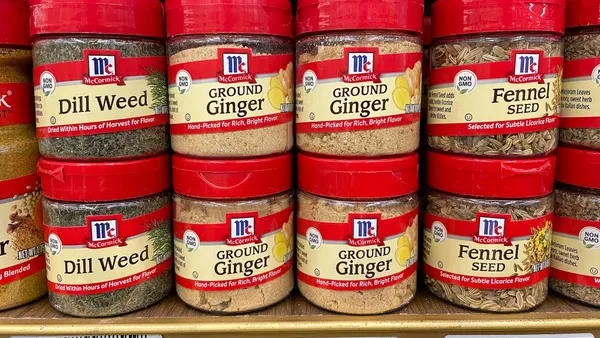
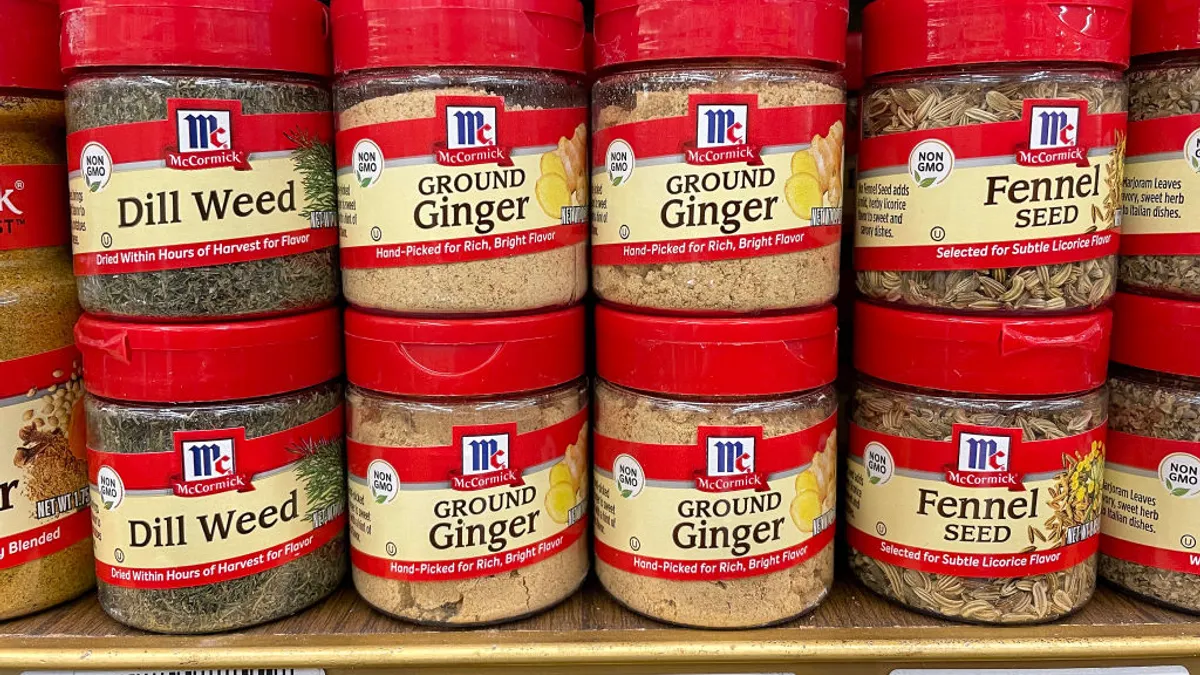
- McCormick & Co. raised its fiscal 2026 inflation forecast from a mid-single-digit year-over-year increase to as much as 7%, citing higher freight, logistics, packaging and input costs, EVP and CFO Marcos Gabriel said during an Oct. 1 earnings call.
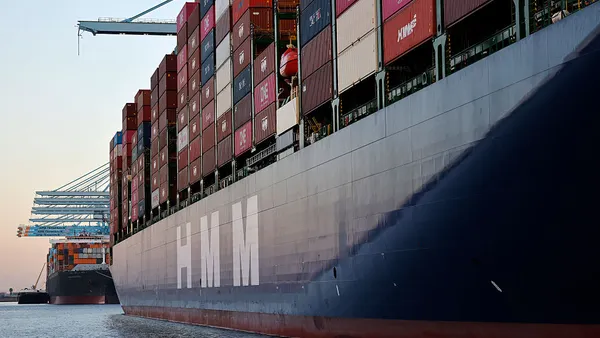
- Higher logistics costs driven by the Iran war and tighter freight capacity stemming from changes in U.S. federal regulations were offset by savings from productivity initiatives, including the company's longtime Comprehensive Continuous Improvement program, Gabriel said.
- For the current quarter ending Nov. 30, McCormick expects higher commodity and freight costs to contribute to year-over-year margin compression, Gabriel said. The company expects inflation to continue into fiscal 2027, which begins Dec. 1.
Dive Insight:
McCormick joined other food manufacturers warning of inflation as the Iran war and other pressures drove up costs. Frozen food maker Conagra Brands said last month that full-year inflation would approach 6%, as logistics and transportation costs rose at roughly twice the expected rate because of a truck driver shortage and higher oil prices. Meanwhile, french fry maker Lamb Weston found inflation persistent in the quarter ending Aug. 30, with costs for freight, edible oils, packaging and ingredients increasing substantially, CFO James Gray said on an Oct. 6 earnings call.
On the freight side, stricter federal industry oversight has tightened capacity for over-the-road and long-haul trucking. Tight carrier capacity, for example, has boosted bulk lead times from 24-72 hours to 7-10 days.
McCormick’s pricing, savings from the CCI program and benefits from acquiring a controlling stake in the McCormick de Mexico subsidiary helped offset higher costs in the third quarter ended Aug. 31, according to Gabriel.
In the period, McCormick expanded its adjusted profit margin by 180 basis points year over year to 39.3% despite higher commodity and freight costs, and adjusted operating income increased 22.1% to $358.5 million.
While procurement costs are weighing on the business currently, McCormick expects those expenses to generally decline during the three years after completing its $44.8 billion merger with Unilever. The costs are expected to account for 40% of the $600 million in recurring annual expense reductions from combining the companies.
McCormick and Unilever previously indicated the deal would close in mid-2027.