Dive Brief:
- Continued challenges along the Suez Canal and Panama Canal are driving about 5% more cargo to be allocated at origin for shipment to the Port of Los Angeles, Executive Director Gene Seroka said during a media briefing on Friday.
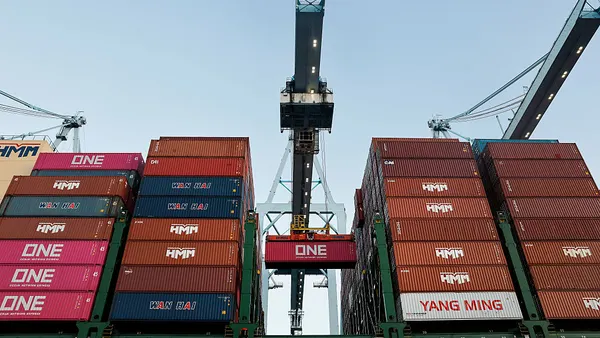
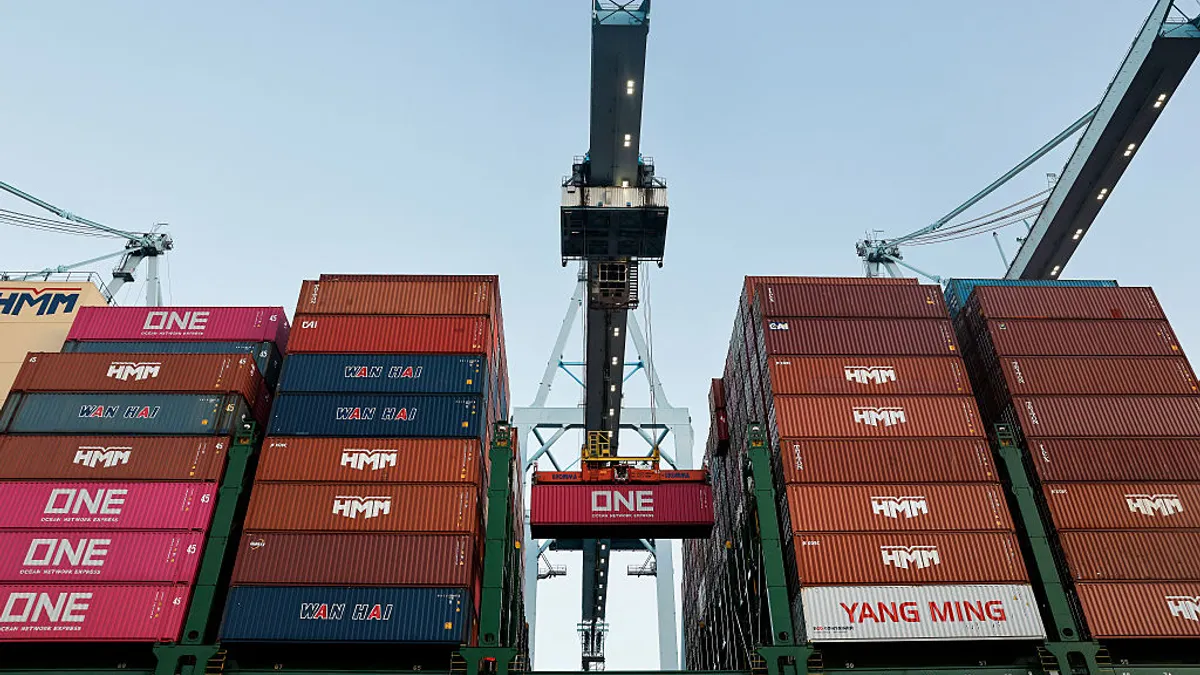
- The port handled 1.04 million TEUs in September, which Seroka said was the busiest month in its 118-year history as major retailers and other importers brought in merchandise for the holiday season and to replenish inventories.
- Loaded imports at the port were 545,696 TEUs in September, up 19% year over year. Loaded exports went up 10% YoY, reaching 125,751 TEUs. Empty containers reached their highest monthly total in the port’s history at 371,206 TEUs, according to a press release.
Dive Insight:
Shippers continue to have reservations about moving cargo along the Panama Canal because of El Niño-related drought concerns.
The major waterway has been making adjustments to its water-saving measures in the event of a drought. In August, the canal had cut its daily number of slots available to nine at its Neopanamax locks, effective Sep. 3. Since then, available slots were raised to 10 due to an increase in average precipitation on the canal watershed, according to a Panama Canal advisory from Oct. 9.
Still, shippers face significant wait time at the canal.
From about January to late September of 2026, there have been 69 container vessels that waited to transit the Panama Canal for more than 100 hours. That accounted for 3.3% of the total vessels to traverse the waterway during that time, against 13, or 0.6%, in the same period of 2025, according to data from MarineTraffic.
“The weekly share spiked in April at the end of the dry season, then climbed from July as the draft cuts came in,” per MarineTraffic. Wait times have improved since then, but concerns continue, as El Niño is expected to peak between October and December, with the 2027 dry season to follow.
Such concerns have helped bring rising cargo volumes to the Port of Los Angeles.
“When I was in Korea and Singapore a couple of weeks ago, talking with not only shipping lines but 3PLs and manufacturers, they're taking even more of their traditional allocations that normally go through the canals and shifting it to Los Angeles,” Seroka told reporters during the briefing.
With vessel fuel prices doubling over the last eight months due to the Iran war, longer transit times burn more fuel at higher prices, Seroka said. Liners are passing these higher costs onto importers and exporters, pushing shippers to look for shorter and quicker routes.
Looking ahead, the port expects another frontloading wave due to several factors, including an earlier Lunar New Year occuring in the first week of February, Seroka said. Further, a current trade truce between the U.S. and China lifts Jan. 10, and shippers wanting to move Q1 seasonal products could cause earlier cargo movement.
“So, this confluence of events means that volume will probably stay a little bit more elevated than normal, and a couple of deadlines that may come to pass are in the minds of supply chain experts around the world,” Seroka said.