Dive Brief:
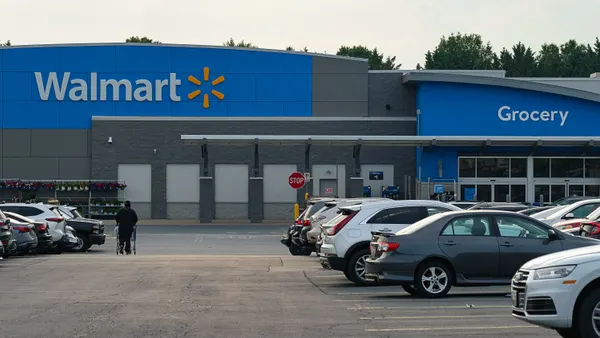
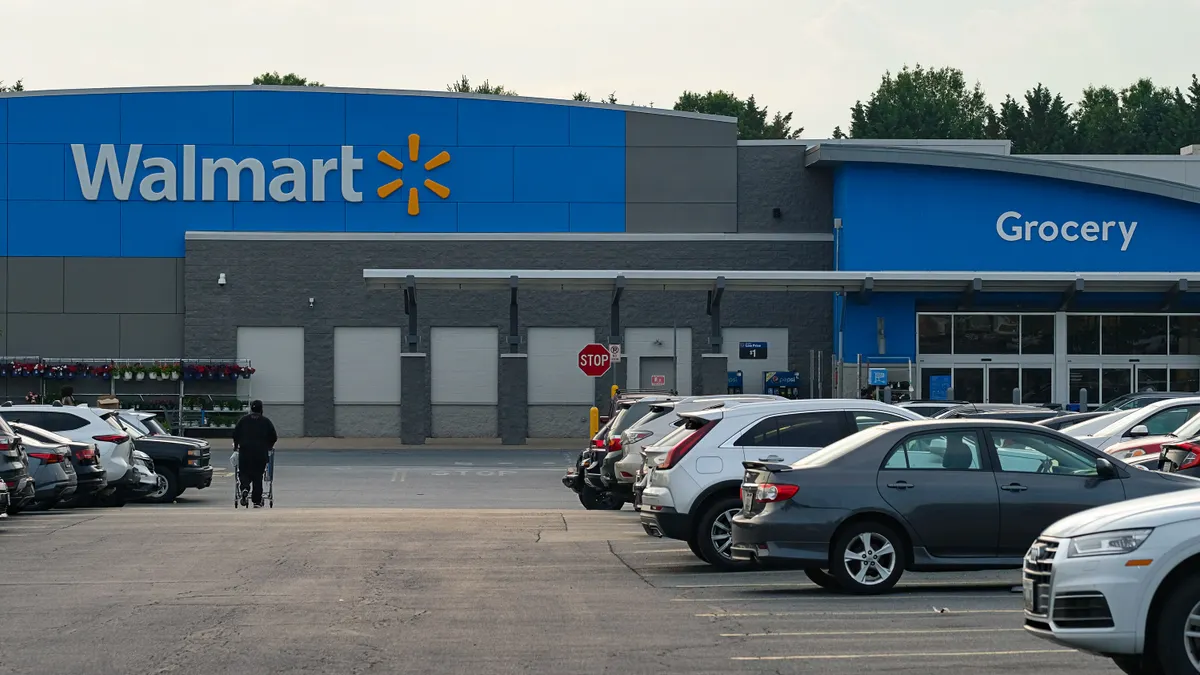
- Walmart has expanded its 30-minutes-or-less delivery offering into 38 U.S. markets, giving millions of additional customers access to a faster fulfillment option, President and CEO John Furner said in a Q2 earnings call Thursday.
- The service began in May at 33 markets, with Dallas, Chicago, Houston, Denver and Atlanta among the initial locations. The new markets added since are Nashville, Tennessee; Omaha, Nebraska; San Antonio, Texas; Wichita, Kansas; and Winter Haven, Florida, a Walmart spokesperson said in an emailed response to Supply Chain Dive.
- "Customers who use fast delivery shop with us more frequently," Furner said. "They deepen engagement with us, and they're more likely to become Walmart+ members. The advances we're making in speed of delivery create another reason for customers to choose Walmart for more shopping occasions."
Dive Insight:
Walmart is among several retailers launching and expanding faster delivery options as consumers seek convenient ways to get goods fulfilled fast, be it food, medicine or last-minute gifts.
Tapping into customer demand for faster delivery has been a core piece of Walmart's growth strategy in recent quarters, and the 30-minutes-or-less service is just one of a growing roster of options. This year, Walmart has also expanded its drone delivery partnership with Wing and brought one-hour delivery to hundreds of Sam's Club stores.
Gross merchandise value tied to fast delivery, or services making deliveries in three hours or less, grew 48% year over year for Walmart in Q2, the Walmart spokesperson said.
"Speed matters, and we have a significant competitive advantage,” Furner said. “Our physical footprint, fulfillment infrastructure, and local delivery capabilities allow us to move closer to customers while maintaining an attractive cost structure."
Faster delivery services are often more expensive. Walmart's 30-minutes-or-less offering, for example, is available for a $10 fee for members of Walmart+, the retailer’s paid benefits program. However, the retailer is still seeing customers flock to speedier services despite additional charges. Deliveries in which customers paid a fee to get the order faster made up 37% of store-fulfilled deliveries in the quarter, an all-time high, EVP and CFO John David Rainey said on the call.
Stores are becoming an increasingly important fulfillment node for Walmart, with the company seeing over 40% sales growth in store-fulfilled deliveries in Q2, Rainey said. Stores handle last-mile fulfillment for 80% of Walmart's e-commerce orders, with that percentage jumping up to 100% for fast deliveries.
Meanwhile, Walmart is also leaning more on automation for supply chain gains. The company has 3,100 of its U.S. stores serviced "with some level of automated freight," Rainey said. That means those stores receive freight that has been handled and palletized by automated systems, according to the spokesperson.
Automation is helping the retailer move inventory more efficiently, deliver faster and strengthen in-stock levels, Furner said.
"They also strengthen the economics of our omnichannel model, and as we improve density and utilization across our network, speed and profitability reinforce one another," Furner said. "And you can see how these advantages build on each other."