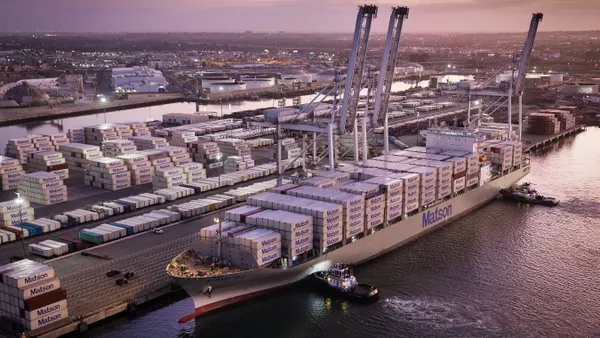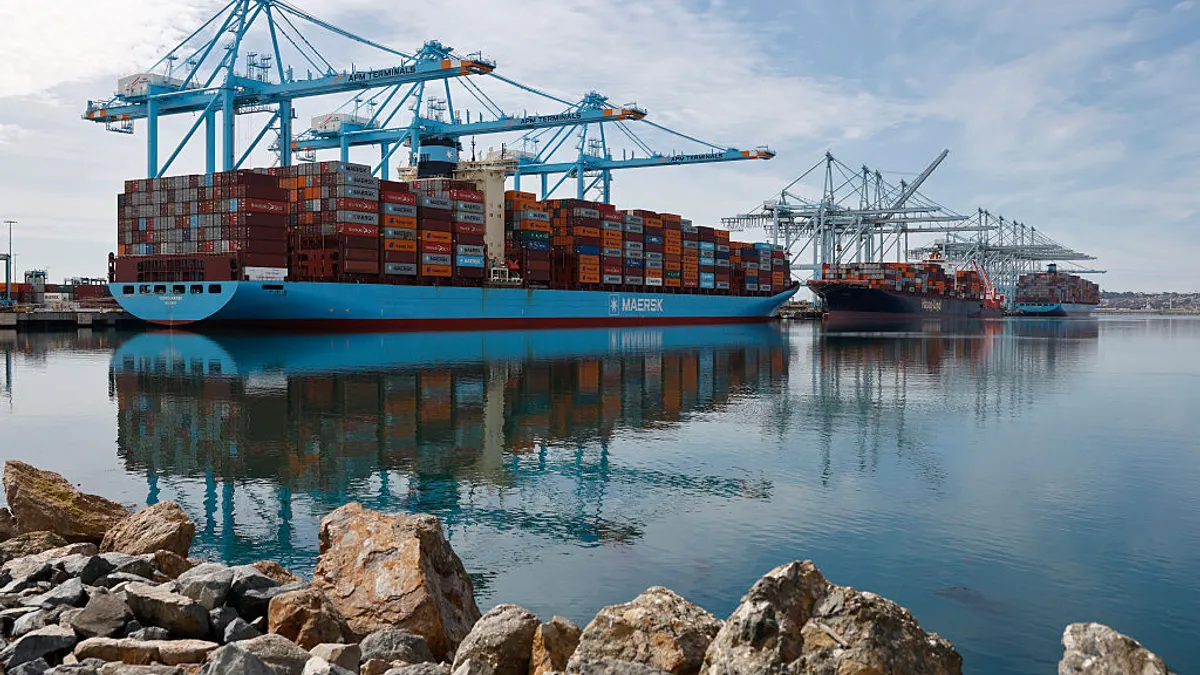
Cargo flow at the Port of Los Angeles remains consistent despite the ongoing military conflict between Iran and the U.S., Executive Director Gene Seroka said during a March 12 media briefing.
“The purchase orders for the spring, spring fashion, summer fashion and some inventory replenishment are not being canceled right now,” he said.
The port processed 824,323 twenty-foot equivalent units in February, up 3% year over year. However, March cargo volumes may drop due to the usual slump that follows the Lunar New Year celebrations in Asia, Seroka said. Looking ahead, April will likely see a rise in volumes as retailers begin their replenishment cycles.
The consensus from customers over the last few weeks is that the 2026 outlook looks flat, with no expected dramatic swings, Ron Widdows, CEO of chassis leasing service provider FlexiVan Leasing, said during the briefing. Unless the situation in the Middle East progresses to something that really “becomes much more serious than what you see today," that outlook will continue.
While Seroka noted that he is not currently seeing any congestion at the Port of Los Angeles ahead of the traditional slack season, that may change.
“You've got some different segments of cargo that may start to get gummed up at ports overseas,” he said. “For us, the Transpacific trade is still the most lucrative in the shipping industry.” Seroka added that a premium is put on such Transpacific services to keep supply chains moving.
While Transpacific cargo flows remain primarily unhindered by the Iran war, oil prices are soaring, which impacts the cost of ship fuel.
Bunker prices are doubling right now and passed on “almost immediately” or within a 30-day notice to shippers, Seroka said. Meanwhile, low sulfur fuel was over $1,000 a ton in Singapore sometime last week, up $500, according to Widdows. A roundtrip cargo route from Los Angeles to Asia is 35 days, meaning “that is almost $2 million in additional costs for every single ship within that rotation,” he said.
Some ocean carriers are taking preemptive measures to mitigate logistics disruptions, including implementing shipping surcharges, route modifications or securing enough fuel supply.
For example, Maersk is lifting more fuel than what a ship requires for its next leg and in some instances in the U.S. where the supply is plentiful, Seroka said.
"They're lifting more here, and using that to fuel ships in Asia, where the supply is a bit tight," he added.
Editor's note: This story was first published in our Logistics Weekly newsletter. Sign up here.